
barn dance, Carharrack, ceilidh, classes, community, dance instructions, devoran, Grampound Road, Ladock, new dances, Penryn, St Erth

Ceilidh class news: lovely friendly groups, new venues from February and a new dance, Woodland Valley Romp!

I’m sat in a patch of sunlight filtering in through the winter realising that the day has a real spring feel to it. We’ve now had a month of new ceilidh classes around Cornwall already and I’m delighted to say that time has flown by.

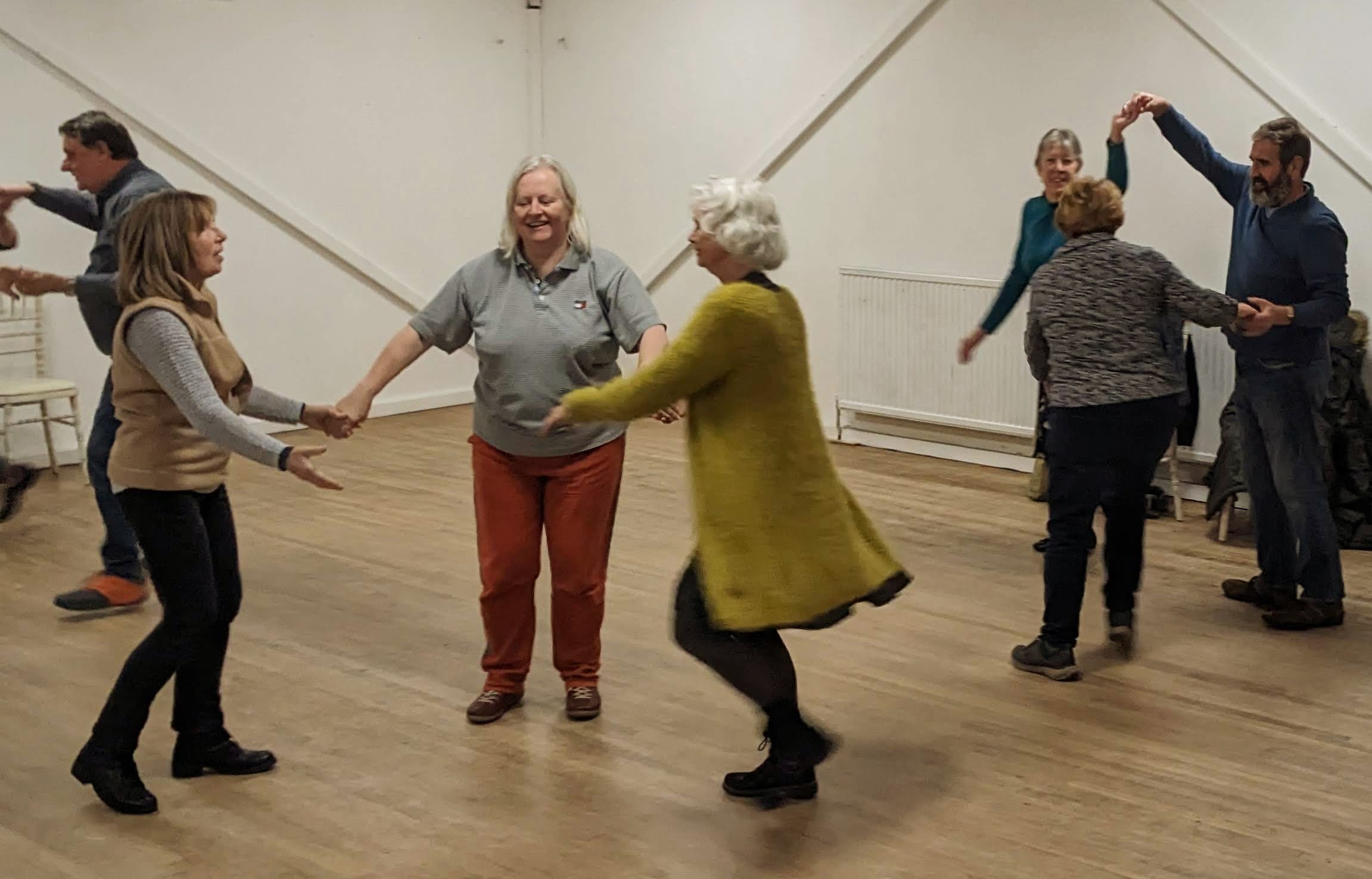
Our regular ceilidh classes in Penryn, St Erth, Carharrack and Ladock/Grampound Road are doing well and each group has a positive, friendly atmosphere. Our all-ages class on a Friday has also been fun and I’m happy to say we are achieving our aim of creating a multi-generational class with people from under 10 to over 80.

Fancy joining us? We have spaces in all classes and welcome everyone. No experience and partner required. ‘Regular’ classes are for adults and teens welcome too (age 12+ is the recommended age but please get in touch to ask about suitability if not sure). All-ages classes are just that, suitable for all ages.

Ladock and Grampound Road Wednesday regular classes – new venues

In fact, our Ladock class has grown beyond the capacity of the space we were using so we have new venues from next week (12th February 2025) and we will be dancing some weeks at Ladock Community Hall and Grampound Road Village Hall (also called Sir Robert Harvey Memorial Hall). Both of these halls have plentiful space and good floors for dancing, so we will be able to twirl and spin to our hearts’ content.

Check the venue schedule here to be sure you go to the correct hall each week.

Ladock Community Hall
Grampound Road Village Hall

On this note, I would like to heartily thank Woodland Valley Farm near Ladock for supporting the development of these classes throughout January and for providing us with a beautiful converted barn to dance in. If anyone wants a good venue for a party or a special event, including with accommodation we’d recommend Woodland Valley Farm, and we look forward to popping back for a visit later in the year to learn about the exciting Beaver Project and maybe even to dance in the bigger barn once the weather warms up.

The Woodland Valley Romp

To honour our time at Woodland Valley Farm we have created a new dance and our Ladock class have tried and tested it, and given it a name: The Woodland Valley Romp. Our set of 16 people fit beautifully in the space!

8 couple longways set (line facing a line, standing opposite your partner). 32 bar jig or reel.

A part:

First corners (those with nobody standing to their right in each line) meet in the middle of the set (this takes 4 beats), turn each other with both hands (8 beats), and return to place (another 4 beats).

Second corners (those with nobody standing to their left in each line) meeting in the middle of the set (4 beats), turn each other with both bands (8 beats), and return to place (4 beats).

B part:

Stars: Couples 2 and 3, 4 and 5, 6 and 7 make right stars (turn for 8 beats), then left hand stars (8 beats).

Over their heads: The top two couples then stand in a line across the top of the set all facing down the set. Others make sure they are in their original places, lines, standing opposite their partners. The two top couples join hands in their line and raise them into a row of arches, then run over everyone’s heads to the bottom of the set (2 people down the middle, one person either side of the set) – as in Riverside Jig. (8 beats*)

All swing: Everyone swings or spins their partners (8 beats*)

*If you need more time for the ‘over the head’ part then you can use a 40 bar tune and adjust the time for the B part accordingly, or remove the ‘all swing’.
barn dance, ceilidh, dance instructions, new dances, Uncategorized

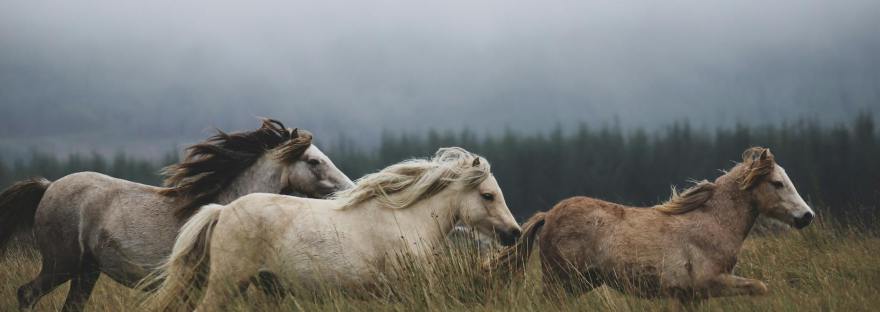
Horse’s Mane – a new ceilidh dance

I enjoy inventing new dances, taking the best of other dances and combining them, or making dances that suit particular audiences. It is quite simple with ceilidh since most tunes are made up of blocks of 8 bars and subdivide into 8 beat sections fitting nicely with a wide range of dance figures, and there are a profusion of tunes that are 32, 40 or 48 bars long, 32 being the most common.

So, we have a new dance to add to our repertoire and it is great for sociable crowds, easy to dance and learn and fun for beginners as well as seasoned ceilidhers. It has been tested out at a wedding ceilidh and with our intermediate class, who agreed it was good fun. Sarelle from our class is to be thanked for the name, more romantic and imaginative than the alternatives of ‘Longways Pat a Cake Polka’ or ‘Pat a Cake Reel’.  The figures reminded her of combing a horse’s mane.

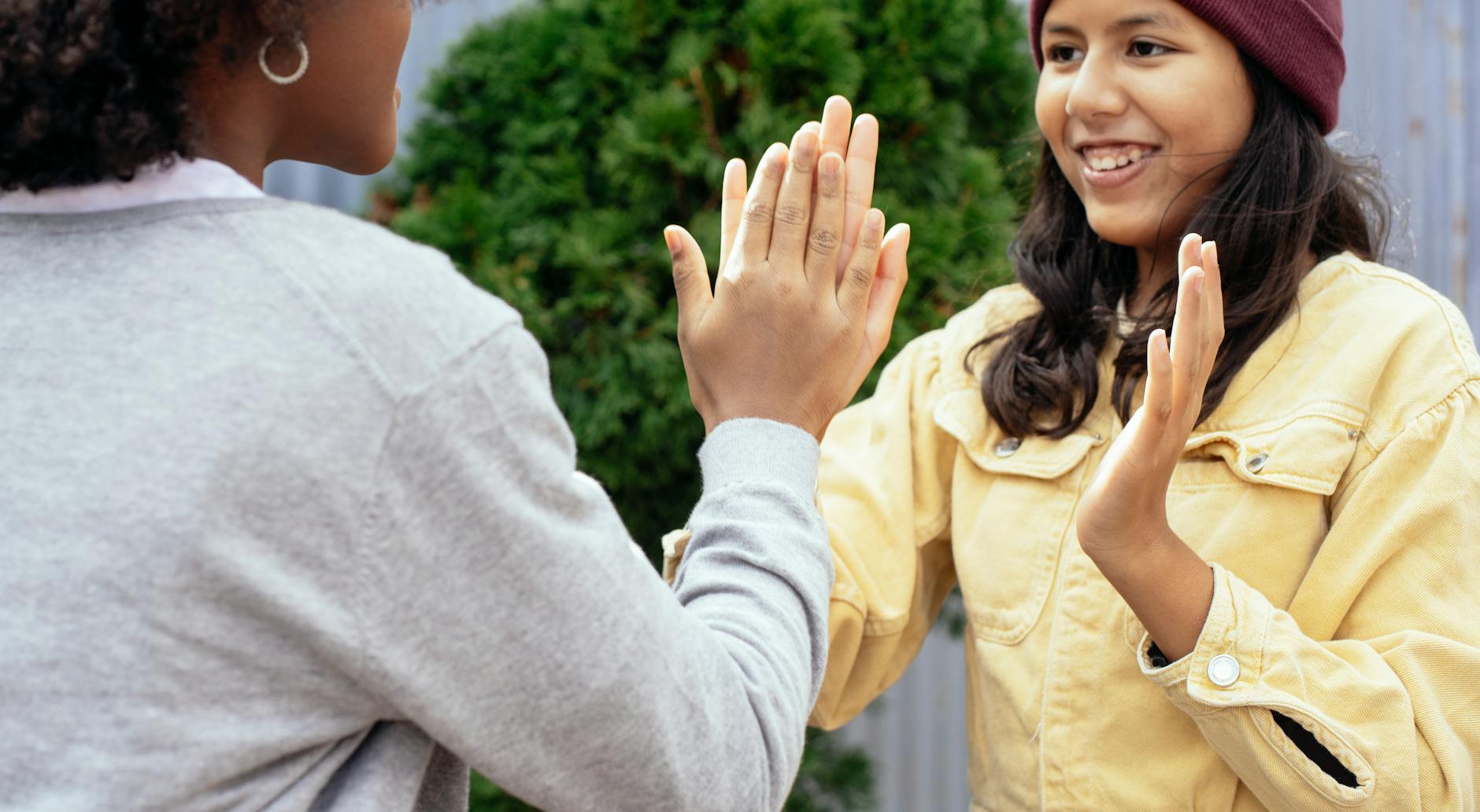
“Pat-a-cake” Photo by Mary Taylor on Pexels.com

This combines elements from some favourite ceilidh dances:

– Pat a Cake polka, an easy and popular Old Tyme dance

– Dhoon Jig, a slightly unusual longways set Scottish Country dance where the two lines dance on opposite directions to start and then partners meet again.

– Virginia Reel, a very common and popular, high-energy, Scottish ceilidh dance with a long history that involves various trips across the Atlantic.

Horse’s Mane

32 bar jig, reel or polka

Longways set for up to 8 couples. The longer the set the more energetic the dancers need to be. We’ve tested this with 4, 5 and 7 couples and all worked well. For less experienced dancers you might choose a shorter set length since they might quite keep up the music otherwise.

A1 (Bars 1 – 8):

Hold hands in lines. Using right feet, tap heel, toe, heel, toe, then take four side steps to the right. So 2 lines diverge since everyone goes to their own right. 8 beats.

Using left feet, tap heel, toe, heel, toe, then take four side steps to the left. This returns you to facing your partner. 8 beats.

A2 (Bars 9 – 16):

Release hands. With your partner play pat-a-cake. Pat-a-cake is a playground game, clap right hands together, left hands together, tap both your hands on your own knees, clap both hands together with your partner. This is 8 beats where you can essentially do any acceptable thing with your partner, so feel free to improvise. 8 beats.

Take your partner in a crossed arm hold (we liked the single forearm hold for a fast spin) and spin with your partner for 8 beats. For those who don’t like fast spinning you might prefer ballroom hold and to polka around (step hop x 4). 8 beats.

B1 (Bars 17 – 24):

Back into your lines. Top couple take both hands together and gallop to the bottom of the set for 8 beats and back for 8 beats. Other dancers clap enthusiastically. 16 beats.

B2 (Bars 24 – 32):

Top couple cast to the bottom of the set and make an arch with two hands. 8 beats.

All people in the lines follow the leader casting down to the bottom following the top dancers. Meet your partner at the bottom of the set below the arch, take inside hands with each other and together go through the arch, then up to the top of the set. Dancers stay in that same order so couple 2 is the new top couple and couple 1 is at the bottom of the set. 16 beats.

Have fun!

Note: If this dance has already been invented by someone else do please let me know it’s name and who first authored it. It is quite possible for multiple people to choreograph the same ceilidh dance, especially using a finite selection of common ceilidh dance figures.

barn dance, Carharrack, ceilidh, classes, community, dance instructions, new dances, Uncategorized

Ceilidh class notes (5/12/23)

Our final class before Christmas! How lovely to have met so many friendly people this term, thanks so much for coming along to our ceilidh classes. It has been a real pleasure to see you develop your ceilidh skills and to see all your smiling faces!

So, in our final class we went over a few dances we had done before, and then we learned a couple of new ones:

Nina’s Double Troika

Learning Nina’s Double Troika at our ceilidh classes

Nina Fenner is also a ceilidh caller with The Rosevilles Ceilidh Band and she will be calling a few dances at our Christmas-ish Ceilidh on Friday 8th December so we learned a dance that she created.

Danced in groups of 3, it is a bit unusual in that each figure takes 4 beats rather than the more common 8. So, at times you might have to move fast. It can be danced to jigs and reels. Here are the instructions:

3 people in a circle. Circle left for 4. Then right for 4.

Break the circle into a line with joined hands. You’ll do this a few times in the dance and it is easiest if you keep in the same order in your three, but if you wish to have more of a challenge then you can vary who takes each place in the line by breaking the circle at different point each time through.

The middle person raises their hands. The person on the right hand end of the line dances first, turning anticlockwise towards the middle person and under the nearest arch to them. This takes 4 beats.

The person on the left hand end of the line now does the same through the arch nearest to them. Again, 4 beats.

Reform the circle. Circle left for 4 and right for 4.

Break the circle into a line again as before with joined hands.

The middle person raises their arms again into arches. The person on the right hand end of the line dances first, passing in front of the middle person and through the arch further away from them. The middle person will also need to turn on the spot. Hold hands loosely so you don’t get into a tangle. This move also takes 4 beats and you need to be faster than before.

The person on the left hand end of the line now does the same, passing in front of the middle person and through the arch farthest from them. The middle person turns on the spot. 4 beats.

Back to the start of the dance.

Clopton Bridge (ceilidh style)

Longways set for 4 couples (though we also managed with five couples and an extra pointy star). 32 bar hornpipe or jig as we did. This English ceilidh dance was written by John Chapman and published in 1987.

This was fun, and a gentler introduction to ‘corners’ than our previous attempt at the Reel of the 51st Division! I do like the unusual figure of first corners turning each other in the middle of the dance and then second corners doing this next.

Generally this dance is done to a hornpipe with step-hop footwork (see any video of Clopton Bridge, and below). To be more ceilidh-ish and suitable for events where there are ceilidh beginners we danced this with simple travelling steps and to a jig.

Clearly shows where dancers go, though rather a lot of ‘step-hop’ instructions!

Lisa Heywood describes a variation for advanced dancers where the end couples do rights and lefts around the outside of the set while the middle couples dance right and left hand stars. It is fun, but requires fast movement and for everyone to know what they are doing! Lots more here from Webfeet about extra variations!

Next stop ceilidh! Join us on 8th December!

And new classes start on 9th January – block book in advance here!

barn dance, ceilidh, dance instructions, new dances

Jonny’s birthday reel

Ceilidh is a living tradition, with new dances and new tunes evolving all the time.

Here I’d like to share Ceilidh Cornwall’s new dance for the summer of 2023, to celebrate Jonny (who likes longways sets with arches) and those ceilidhers for whom OXO isn’t quite their cup of tea (perhaps due to more beer, or prosecco, than either OXO, bovril or tea!).

Formation: Longways sets, works well with 8 dancers but also fine with as many as will. Stand opposite your partner.

Music: 32 bar jigs or reels. Number of repeats at least equal to the number of couples in a set.

Bars 1 – 16 (A part):

Hold hands in lines.
Forward 4
Back 4
One line makes arches by lifting arms. Forward 4, under arches and swap sides 4.

Repeat above, but arches made by the other line.

Bars 17 – 32 (B part):

All join hands and make one large circle. Circle left for 8, right for 8. Back into original lines.

Top couple hold hands. Everyone else joins hands with partner and makes a tunnel of arches. Top couple gallop under arches to the bottom of the set. (8)

If there is time, everyone swing until time to start again. For fun, couples can swing as soon as the top couple have gone through their arch. (8)

Without calling from a stage it can be hard to see whether the top couple have reached the bottom of the set or not, if the set is very long. So best to encourage the top couple to move fast under the arches and call based on the beats, or whether it looks like dancers are mostly keeping up, or if there is chaos!

Reform into lines and hold hands in lines for the next time through the dance.

Would be lovely to know if you try this dance and enjoy it!